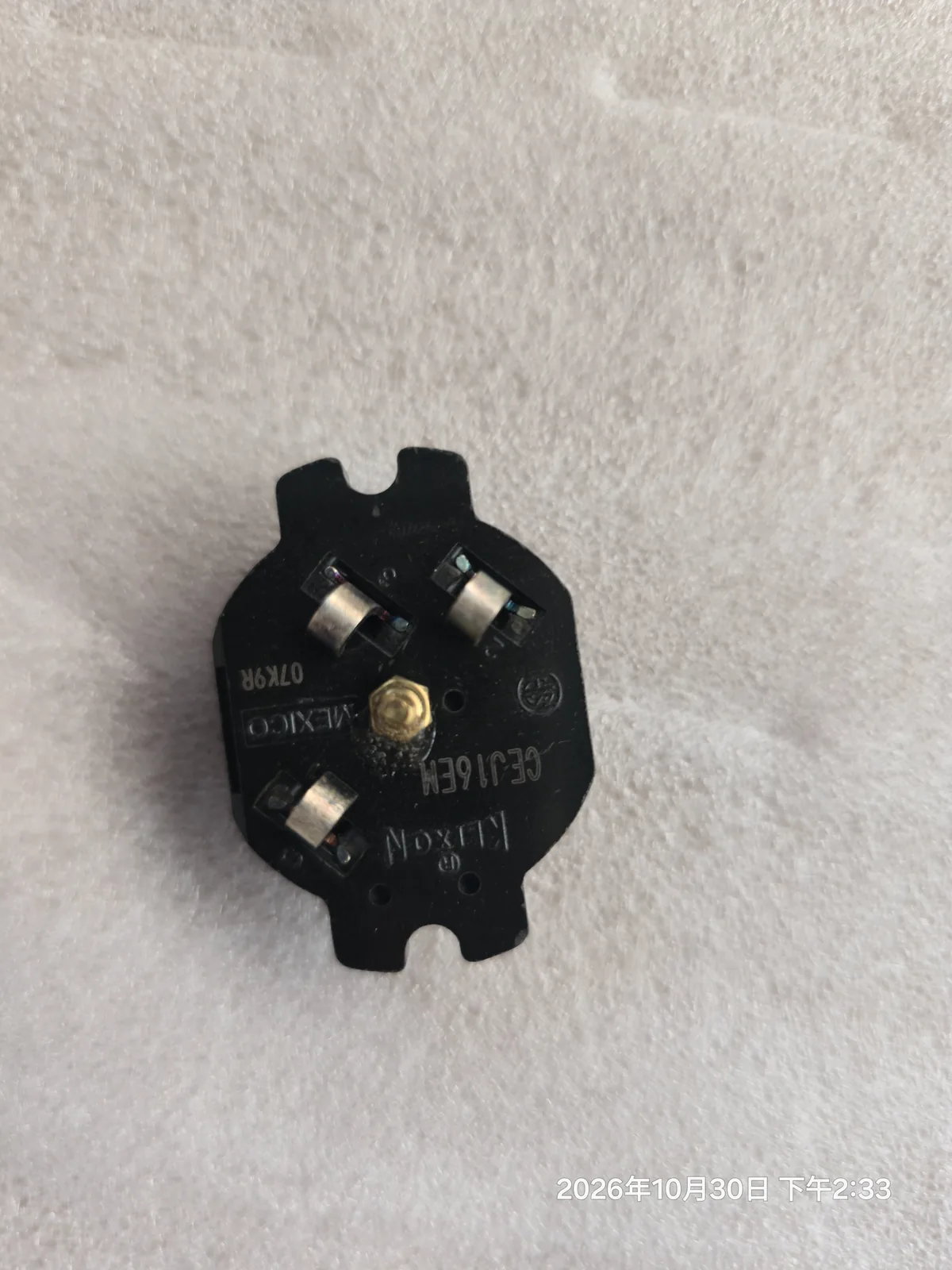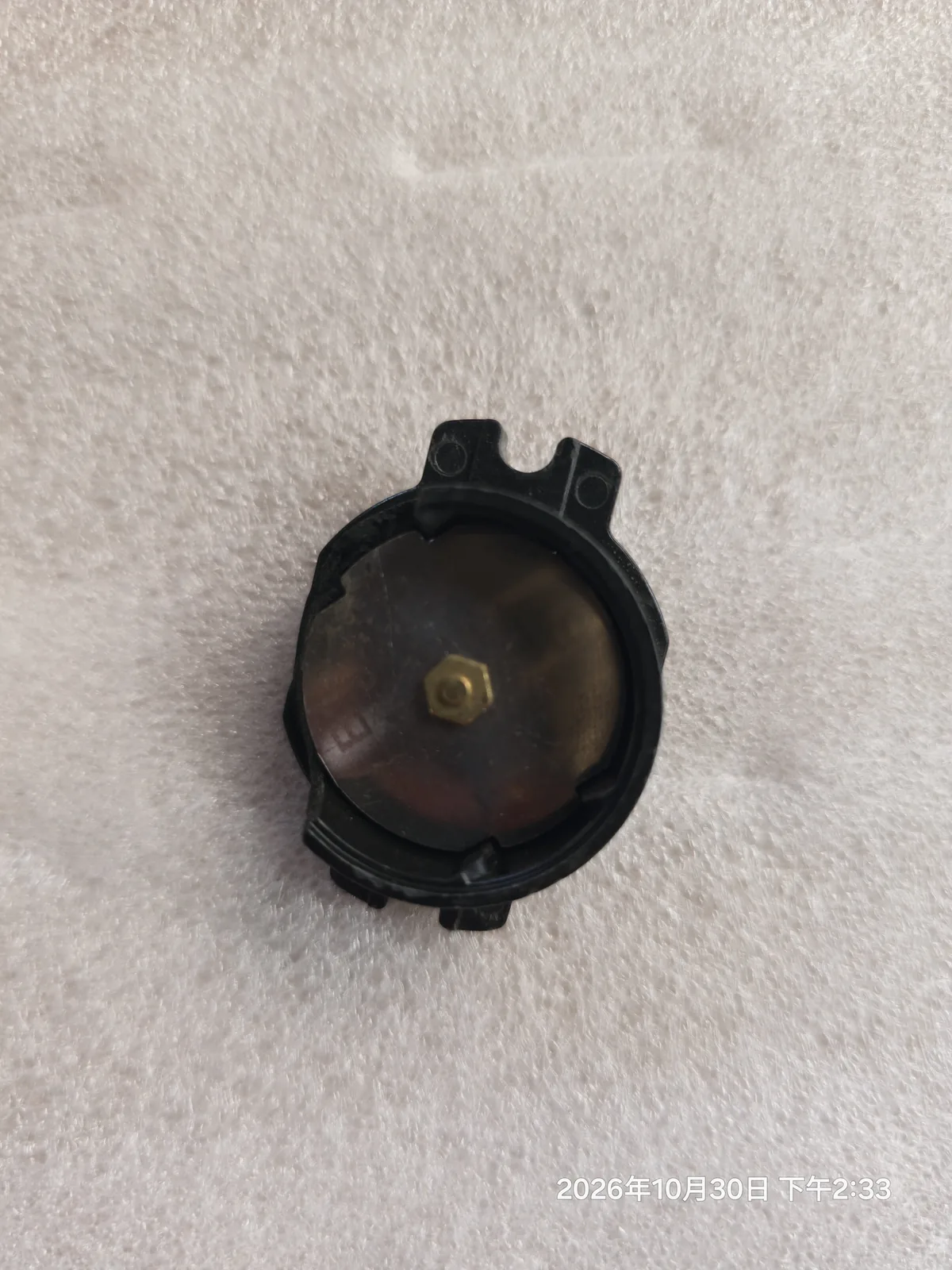
Order CEJ-16-EM when that number appears in the approved equipment record. The photographed device carries the compact marking CEJ16EM. Two photographs show the marked terminal face and the opposite side of the housing. Condition on request. The photos let a buyer compare the identifying features of this specific unit, but they do not establish calibration, reset behavior or suitability for a particular motor.
Start by turning the marked face upright in the reference image and reading the characters as a single line. The compact print omits the hyphens used in the ordering reference. Record the printed form separately and keep CEJ-16-EM as the requested part number on the inquiry. The letters EM are significant. Do not use another CEJ variant to fill a missing or uncertain suffix on a service ticket. If the original marking is obscured, obtain the equipment parts list or a clearer image instead of asking the supplier to guess.
The marked photograph shows three visible metal terminal features around a central fastener. The other photograph shows the opposite face. Keep the two views together when requesting identification of the Klixon CEJ motor protector. An image of the round side alone may not distinguish the part from other devices that share a similar outline. If the supplier offers a substitute, request a photo of its own marking and a terminal view taken from the same orientation. The aim is to compare physical evidence, not to identify the electrical role of each terminal from a photograph.
The housing has visible mounting ears. An eared motor protector may resemble another part at first glance while differing in the angle of the terminals, the body depth or the position of the retaining features. Put an approved sample or a drawing beside the reference views. Compare the ears relative to the terminal face, not just the outer diameter. If the original installation uses a bracket or cover, note where it limits access. A photograph does not give a reliable scale for mounting dimensions.
For a maintenance request, ask the equipment owner to identify the approved part and record which aspects of the fit can be checked without a sample. A reviewer may be able to confirm the general outline from an image while still needing dimensions or a drawing for acceptance. Keep the fit review separate from the protection review. An eared motor protector with a matching case should not be installed until the exact configuration has been checked against the approved application.
A search for a Klixon CEJ motor protector may return several models that look alike. Use the complete marked and approved identifiers to compare them. Keep HR, DV, ALN and EM references on separate lines when they appear in a sourcing request. Similar housing features do not establish the same switching behavior, terminal functions or electrical setting. Ask the responsible reviewer to resolve the difference instead of accepting a general family cross reference.
If the buyer is waiting for exact documentation, identify the open question in the request. The supplier can quote an inspection sample of CEJ-16-EM while the application review is still open. Make the purpose of the sample clear. A unit accepted as a visual match has not necessarily been approved for service. Do not use the number 16 as an electrical or temperature value unless exact documentation supports it.
For a loose lot, ask whether the photos show the material being quoted and what identity evidence can accompany shipment. Do not assume original packaging, unused condition or a particular date code from the two unit photos. Where a sample is required, decide what checks must be repeated on the balance and who will review any discrepancy. Keep the supplier's answer with the quote rather than relying on a note that only says Klixon CEJ motor protector.
Compare the unit marking against the quote and the approved spare reference before issuing parts to maintenance. Record which image or drawing was used for the comparison and whether terminal and mounting features were checked. If a piece has a different suffix or unreadable marking, segregate it and ask the buyer to resolve the exception. A receiving record for an eared motor protector should distinguish an identity check from a functional evaluation. Any electrical acceptance procedure should follow the approved equipment requirements.
No. The photograph shows the compact print; use the full hyphenated reference in the quote and keep the visible mark as supporting evidence.
Not on appearance alone. Ask for the full proposed part number and obtain approval for any alternate configuration.
Use Request a Quote for CEJ-16-EM. Include quantity, destination, equipment reference and the marking or inspection evidence needed for acceptance.
Explore premium ICs, sensors, and power controls to support your advanced technical requirements.