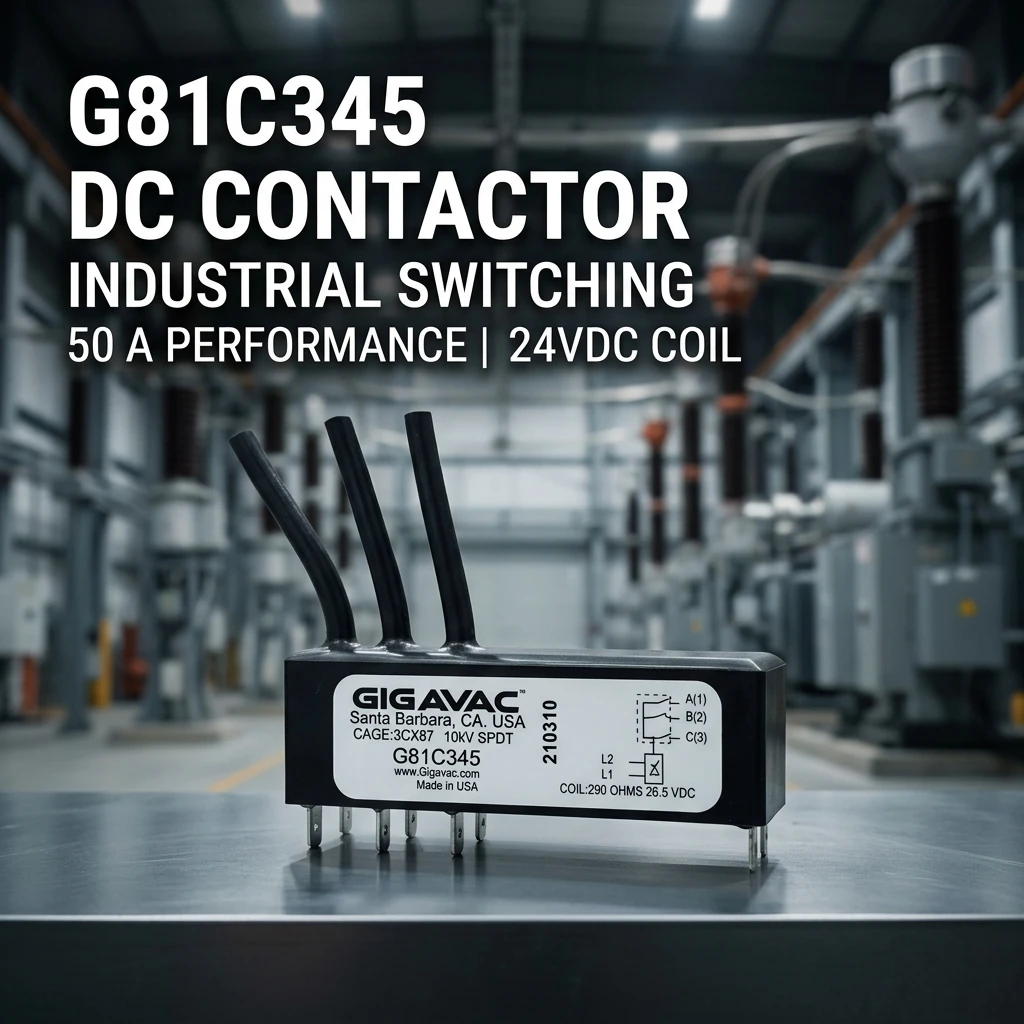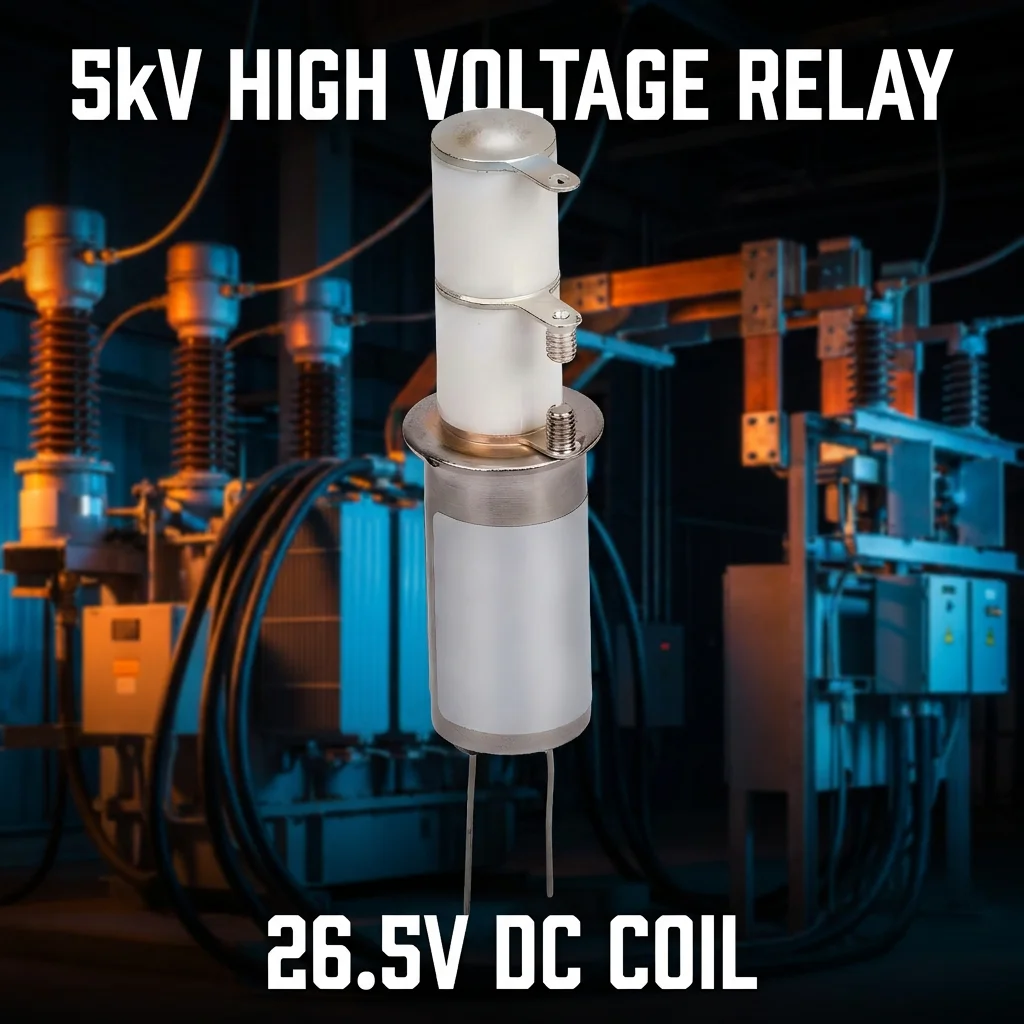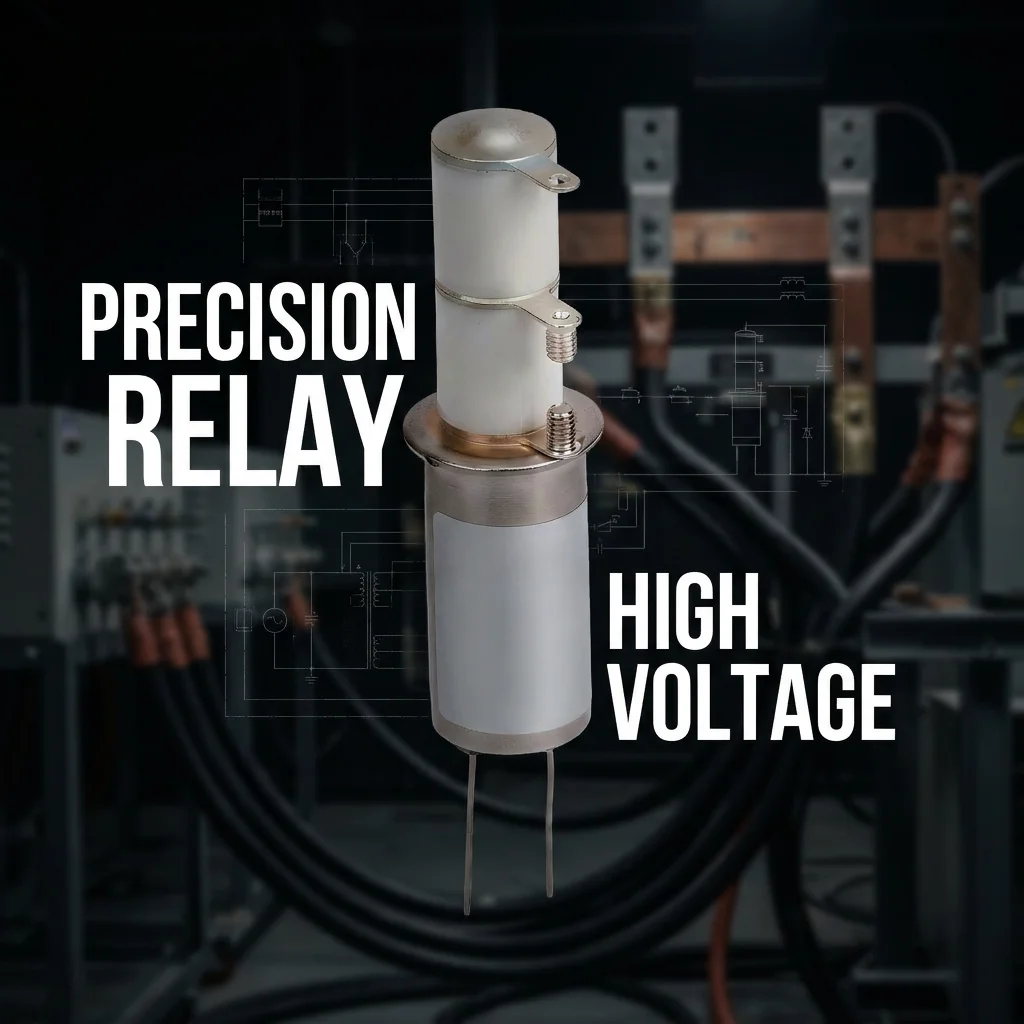
Sensata-Gigavac G81C345 is a G81C series High Voltage Relay with SPDT contact form, 10kV AC/DC switching capability, 10A contact rating, 26.5VDC coil, tungsten contacts, PC pins, and flying leads.
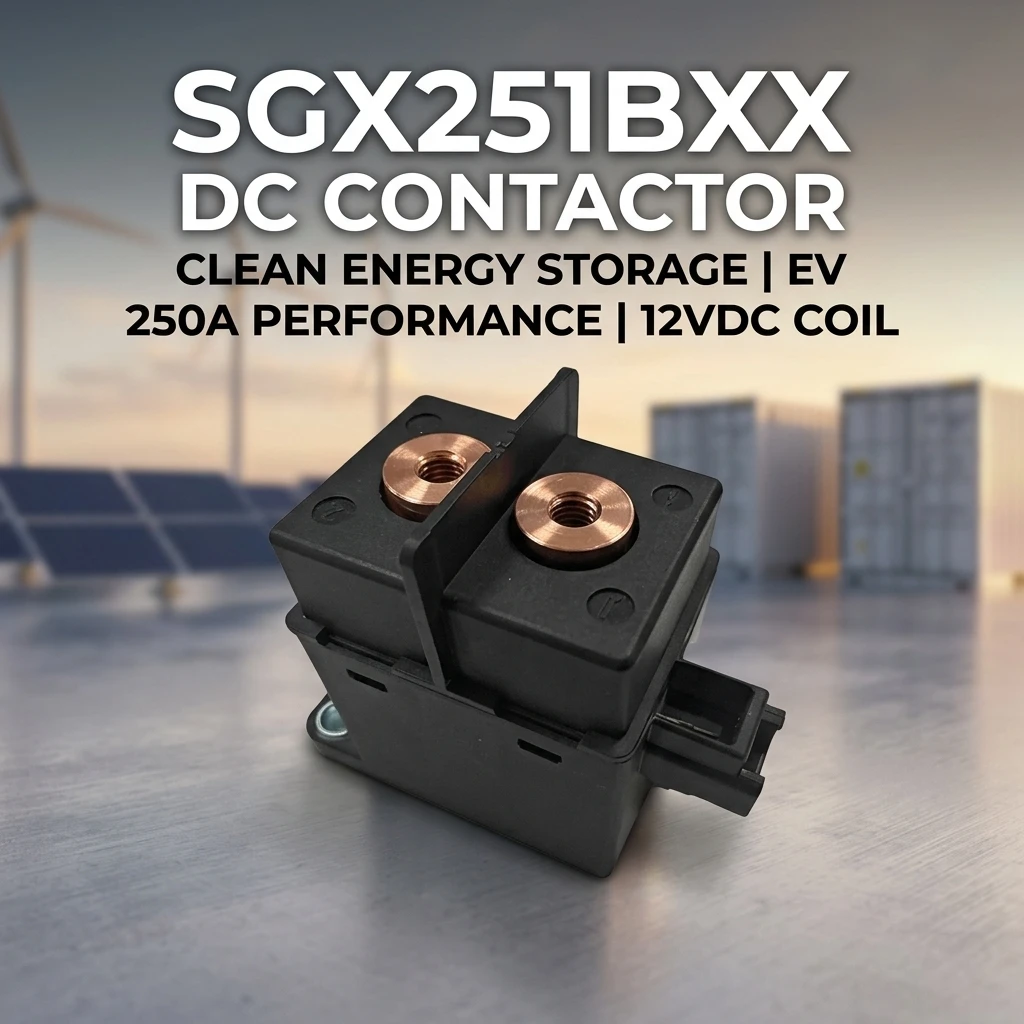
Sensata Gigavac G81C345 is a 10kV SPDT High Voltage Relay from the G81C series, designed for high-voltage routing, laboratory switching matrices, source selection equipment, and compact test instruments that need one relay to transfer a circuit between two paths. This High Voltage Relay uses a single-pole double-throw contact form, 10A contact rating, 26.5VDC coil, tungsten contacts, PC pin coil termination, flying lead contact termination, and through-hole mounting. It is not a DC power contactor for battery isolation; it is a specialized High Voltage Relay for transfer switching in lower-current 10kV-class systems.
G81C345 is useful where one common terminal must move between a normally closed path and a normally open path under coil control. In high-voltage test systems, this can reduce the number of relays needed for channel selection, discharge routing, calibration paths, or source/load switching. The 10kV AC/DC switching capability gives the designer voltage headroom for specialized instruments, while the 10A rating keeps the relay focused on high-voltage control paths rather than main high-current power distribution.
G81C345 should be positioned as a 10kV SPDT High Voltage Relay for high-voltage routing and transfer switching. Compared with G81AB57, which is an SPST-NO relay, G81C345 provides a transfer contact arrangement. Compared with G43C332, G81C345 remains a 10kV SPDT relay but should be differentiated by its G81C package, 10A rating, PC pin and flying lead termination, and test-instrument routing focus.
The 26.5VDC coil is suitable for specialized industrial, aerospace-style, defense, and laboratory control systems that use 26V-class control power. The relay can be mounted in any position according to Sensata series information, giving designers flexibility when building dense switching panels or custom test fixtures.
The main advantage of G81C345 is its SPDT transfer function. A High Voltage Relay with 1 Form C contacts can route one circuit node between two high-voltage paths, which is useful for test channel selection, polarity routing, alternate load paths, and instrument safety sequences. This can simplify systems that would otherwise need multiple normally open relays.
The 10kV switching rating makes G81C345 suitable for elevated-voltage circuits beyond the range of ordinary electromechanical relays. It can be used in systems where voltage isolation, compact packaging, and controlled switching behavior are more important than very high current capacity.
Tungsten contacts improve hot-load switching durability in demanding high-voltage applications. The actual switching limit still depends on waveform, circuit energy, load type, frequency, duty cycle, and safety margin, so the relay should be evaluated in the complete circuit.
The PC pin and flying lead configuration supports compact board-level assemblies while still allowing high-voltage leads to route through the equipment layout. This is useful in test instruments, switching matrices, and custom HV panels where control electronics and high-voltage wiring must be organized carefully.
G81C345 is especially suitable for high-voltage test instruments and switching matrices. In a hipot tester, insulation analyzer, capacitor test system, or laboratory HV selector, this High Voltage Relay can switch one common node between two test states, route a source to alternate outputs, or select a measurement path under controller command.
The relay can also be used in source selection panels, pulse circuit routing, electrostatic equipment, calibration fixtures, high-voltage power supply outputs, and research systems. Because it is SPDT, G81C345 is best used where transfer behavior is required. If the circuit only needs simple on/off control, an SPST High Voltage Relay may be simpler.
Before selecting G81C345, confirm that the circuit needs an SPDT High Voltage Relay. The transfer contact form is valuable when the design must switch between two paths, but it may be unnecessary for simple isolation. Engineers should verify maximum voltage, steady current, hot-switching current, load type, switching frequency, spacing, and enclosure conditions.
The coil driver should be designed around 26.5VDC operation. Check available control voltage, driver current capacity, release behavior, suppression strategy, and required switching timing. Mechanical design should also consider PC pin layout, flying lead routing, insulation spacing, strain relief, and service access.
G81C345 is used for high-voltage transfer switching, test instruments, switching matrices, source selection, and 10kV-class routing circuits.
Yes. G81C345 is a Sensata Gigavac G81C series High Voltage Relay with SPDT contact form and 10kV AC/DC switching capability.
G81C345 uses a 26.5VDC coil. Distributor data lists approximately 290 ohms coil resistance.
SPDT means single-pole double-throw. The relay transfers one common contact between a normally closed and normally open path.
G81C345 is an SPDT High Voltage Relay for transfer switching, while G81AB57 is an SPST-NO relay for a single normally open switching path.
G81C345 is a 10kV SPDT High Voltage Relay for high-voltage test equipment, routing matrices, source selection panels, and specialized instrumentation. With its Sensata Gigavac G81C design, 10A contact rating, 26.5VDC coil, tungsten contacts, PC pins, flying leads, and transfer contact arrangement, it is a practical option for systems that need compact 10kV switching between two controlled circuit paths.
Sensata-Gigavac G81C345 is a G81C series High Voltage Relay with SPDT contact form, 10kV AC/DC switching capability, 10A contact rating, 26.5VDC coil, tungsten contacts, PC pins, and flying leads.
Explore premium ICs, sensors, and power controls to support your advanced technical requirements.